


by Noriyuki Morimoto
Through the work-style reform, corporate employees are diversifying their sources of income. If it becomes common to hold multiple jobs, not only will people work for multiple companies, but some will also earn income outside employment. Then, what do such individuals consider to be their primary occupation?
Is it the occupation that accounts for the largest share of their total income? Or is it the position that represents the largest portion of their total working time? Or, since the amount of intellectual effort invested is unrelated to working hours, should they instead consider the proportion of intellectual activity? Furthermore, given that humans value the sense of fulfillment and joy gained from work above anything else, should they consider their primary occupation to be the one that gives them the greatest sense of purpose?
If we speak of a sense of purpose, the source of income becomes irrelevant. In work-style reform, the meaning of working hours—that is, the time invested to earn income—changes significantly. Until recently, everyone was aiming to increase income by improving productivity while keeping hours constant. Going forward, as lifestyles diversify, some will seek to shorten working hours by improving productivity while keeping income constant.
Every corporate employee possesses multiple selves: the self as a family member, an active participant in the local community, a school alum, a regular at a favorite pub, a member of a club sharing common interests, a global citizen concerned with environmental issues, etc.
Someone who minimizes their time spent working at a company to earn income, and dedicates more time to their passion, such as mountain climbing, is perhaps no longer a company employee but rather a professional mountaineer. As they practice and refine their mountaineering skills, readily attaining the level of a professional guide, it is a natural progression to shift their area of earning activity and start working as a mountain guide. This is true career transition.
Becoming a company employee is not the start of your career, and changing employers is not a career change. The true career change is leaving company employment, and true employment is aligning one’s passion with one’s source of income.
[Category /Work-Style Reform]
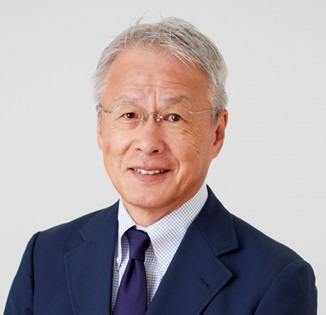
Chief Executive Officer, HC Asset Management Co.,Ltd. Noriyuki Morimoto founded HC Asset Management in November 2002. As a pioneer investment consultant in Japan, he established the investment consulting business of Watson Wyatt K.K. (now Willis Towers Watson) in 1990.