


by Noriyuki Morimoto
A basic rule of politics is to speak first of the public’s interests in order to influence them. Similarly, a basic rule of corporate management is to speak first of the customer’s interests in order to influence them. More generally, speaking first of the counterpart’s interests is the essence of leadership.
In business activities, at least in the minds of leadership, it is probably understood that you should talk first about the customer’s interests, as a fundamental principle of business. But when a company hires numerous employees and demands the execution of various duties, does it manage to maintain the principle of prioritizing employee interests?
It is common for companies to demand diligence and ingenuity from employees, and to expect them to pursue self-improvement for their own growth. Yet, in many cases, the employees’ interests are not concretely presented, nor are they promised.
To motivate people, it is necessary to promise them benefits. Needless to say, there is no guarantee that what is promised will be realized. However, a promise is meaningless if it lacks the immediate power to make the recipient believe it will be fulfilled. Likewise, if the promise cannot later instill a tangible sense that it is being fulfilled, it remains meaningless. Herein lies the essence of politics and management, and the essence of leadership.
A promise is a commitment. A company’s commitment to its employees and customers earns their respective commitment in return. This mutual commitment forms an organization as a community with shared beliefs, which supports the creation of shared value for customers, employees, and the company.
[Category /Financial Regulations]
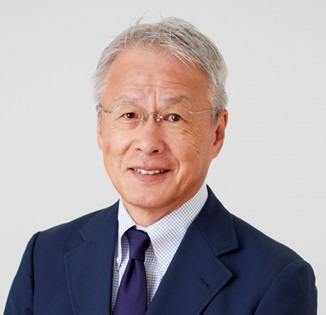
Chief Executive Officer, HC Asset Management Co.,Ltd. Noriyuki Morimoto founded HC Asset Management in November 2002. As a pioneer investment consultant in Japan, he established the investment consulting business of Watson Wyatt K.K. (now Willis Towers Watson) in 1990.