


by Noriyuki Morimoto
Loans are basically provided on the condition that the borrower has regular income which can be used to repay the debt. This is a fundamental principle of finance. Then, how about students? Generally speaking, students should not be eligible for loans, as they usually lack an income and the ability to repay debt.
However, students are expected to get a job after completing their studies, so even if they have no income now, they are likely to earn income in the future. It would be better to say that students are individuals who pursue their studies in order to secure future income. Therefore, lending to students becomes possible by treating that future income as the repayment source. It is, so to speak, a loan to be repaid through future career advancement.
In fact, the same concept applies to finance for corporate capital expenditure: the source of repayment is the future revenue expected from the operation of the funded equipment. In such cases, it is undeniable that lenders such as banks tend to be overly conservative when evaluating future revenue projections. A rigid screening process, where only existing revenue is evaluated, often results in smaller loan amounts, potentially hindering the companies’ ability to actualize their business plans.
This could work against the social function of finance to support industrial growth. For this reason, The Financial Services Agency has urged banks and other institutions to adopt lending policies focused on evaluating business viability — that is, looking beyond a company’s current operations to the future of its business activities.
That said, even the FSA cannot demand that banks actively finance the construction of new facilities for newborn companies with zero sales. This goes beyond the function of lending as a financial tool: other methods should be considered, most notably venture capital investment.
Equity investment is a convenient fundraising method for startups because no specific repayment terms are attached. It is, in essence, a form of financing that pays only upon success. Because equity investment, like debt, depends on external funds, the management of the funded company is strictly held accountable to the investors, i.e., the shareholders. The absence of repayment terms means the company must exercise even greater self-discipline and bear responsibility. This is what corporate governance truly means.
[Category /FinTech]
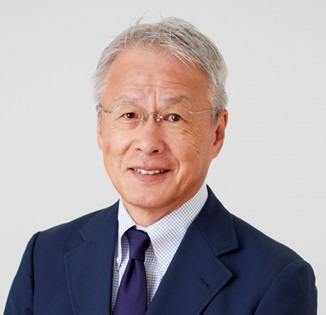
Chief Executive Officer, HC Asset Management Co.,Ltd. Noriyuki Morimoto founded HC Asset Management in November 2002. As a pioneer investment consultant in Japan, he established the investment consulting business of Watson Wyatt K.K. (now Willis Towers Watson) in 1990.