


by Noriyuki Morimoto
Clarifying the relationship between work and results is a perennial challenge for HR. It seems that in the past, the dominant belief was that work naturally leads to results. Thus, efforts were made to assign a monetary value to work.
However, you cannot put a price to work unless the relationship between work and results is clarified beforehand. This is why there has been a shift in approach, from the view that work leads to results, to identifying work as what actually contributed to results.
Even so, given that results are delivered through a complex chain of work done by many people over varying timeframes, it is theoretically possible but obviously impractical to precisely analyze those chains, define each task, and calculate their price.
But that’s okay. Rigorous analysis doesn’t matter; the only issue is whether the workers accept it. Essentially, all HR can do is to define work in a way that provides a logical explanation for its connection to results, place a hypothesis backed by experience regarding that relationship, and continue to verify it.
Such verification will inevitably reveal work that doesn’t lead to results—work that, by definition, isn’t work. This is a groundbreaking discovery. By definition, there cannot be people who work desperately hard yet unfortunately fail to achieve results. That simply means they are not working.
However, there is no denying that such people are doing something desperately hard. So, what are they doing? Since we can’t tell what they are doing, we generally call it “action.” This means that action leading to results is work, and action not leading to results is nothing.
Thus, compensation evolves into rewards for work that leads to results, and further, into rewards for actions that lead to results. As for promotion, the focus shifts to actions that deliver results, and companies go in the direction of promoting individuals who take such actions.
So, what about people whose behavior does not lead to results? There are likely limits to reforming such patterns, whether through internal or external discipline. If they are to be naturally weeded out, the compensation paid to them during that period must be regarded as an unavoidable expense.
[Category /Human Capital Investment]
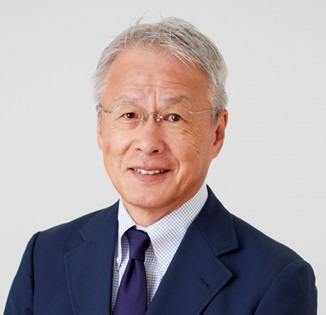
Chief Executive Officer, HC Asset Management Co.,Ltd. Noriyuki Morimoto founded HC Asset Management in November 2002. As a pioneer investment consultant in Japan, he established the investment consulting business of Watson Wyatt K.K. (now Willis Towers Watson) in 1990.