


by Noriyuki Morimoto
While companies are environments where people work, they have to be open environments freely used by all members in order for the buds of creativity to sprout. This is because individuals are the protagonists in the birth of creativity. The company’s role is to nurture the buds of creativity within an environment meticulously prepared for it. At this stage, the company’s strategy takes center stage.
During Japan’s period of economic growth, such matters may not have been consciously acknowledged, but it was probably widely understood as common sense. Cultivating talent was not about companies taking the lead in developing people; rather, it was about employees taking the lead within the workplace environment, where individuals naturally grew on their own. Consequently, promoting talent meant providing capable individuals with opportunities to challenge themselves and offering an environment where they could grow further. This was inherently part of the company’s personnel strategy based on its business strategy.
Simply put, in Japanese companies of the past, those who could grow (who would grow on their own) were promoted to core roles, while those who couldn’t grow were found suitable secondary roles and compensated accordingly. Moreover, Japanese companies of that era possessed truly inspiring creative environments—places where new products were developed, scenes that could have been scripted for television dramas. This creative environment was likely a combination of an environment where creativity could sprout and conditions where those sprouts could grow.
However, today, in many Japanese companies, the environment where creativity can sprout has been lost. Even the rare sprouts of creativity that miraculously emerge wither away in an instant. The causes are the loss of workers’ autonomy—that is, freedom within discipline—and a lack of diversity in the working environment.
Creativity is transformation, and creativity can only be born from transformation. To use an analogy, creativity is like a chemical reaction that changes the composition of matter, and chemical reactions require catalysts. What constitutes the environment that sparks such chemical reactions is a difficult question, but one thing is certain: placing similar things in similar arrangements yields nothing.
It is precisely because diverse elements continue to move freely that something collides with something else, and through the action of a catalyst, something new is born. When we directly acknowledge such serendipity, an organizational theory emerges: increasing diversity raises the probability of such outcomes.
[Category /Human Capital Investment]
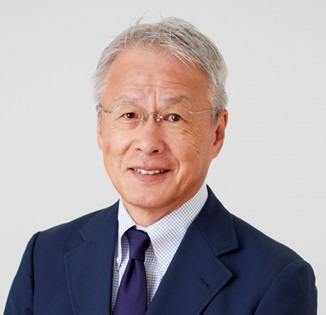
Chief Executive Officer, HC Asset Management Co.,Ltd. Noriyuki Morimoto founded HC Asset Management in November 2002. As a pioneer investment consultant in Japan, he established the investment consulting business of Watson Wyatt K.K. (now Willis Towers Watson) in 1990.