


by Noriyuki Morimoto
A farmer, nearing death, told his lazy sons he had hidden treasure in his vineyard. They dug up the entire vineyard, but found no treasure. Instead, their grapes bore abundant fruit. This is Aesop’s famous fable, “The Farmer and His Sons.” The moral is that for humans, toil itself is the treasure.
The philosophical point of this fable lies in how the farmer’s lie was believed by his sons as truth. The farmer’s claim at its core was, for the sons, an indisputable historical fact. This demonstrates the authority of the father, sufficient to make a lie pass as truth.
Every ethnic group’s origin is invariably steeped in myths and traditions. While much of its content may be pure fantasy, members of the group believe in these myths to varying degrees. Conversely, the scope in which myths hold authority as the origin of history defines the ethnic group itself, just as believing the farmer’s lie was what made them his true sons.
Without believing the lie, they could never have known that hard work itself was a treasure. In order to know, one must believe. The lazy sons knew nothing of hardship, or the creative meaning of labor. To understand the meaning of hardship, one must endure it. To gain experiential knowledge, experience, that is, action—must precede understanding.
Once the meaning of hardship is known, ingenuity arises from its continuation. Recognizing its fruits sparks further ingenuity, so experiential knowledge self-replicates. Eventually, hardship transforms into the joy of labor. But what, then, triggers the initial action?
Simply preaching the principle that hardship is a treasure would not have made the sons understand it. Moreover, for the sons unwilling to endure hardship, experience alone could not have made them grasp the principle. Reason is generated retrospectively; it does not function prospectively. Therefore, it was absolutely necessary to first create a lie—a myth of treasure, so to speak—and for that myth to be believed.
[Category /Corporate Governance]
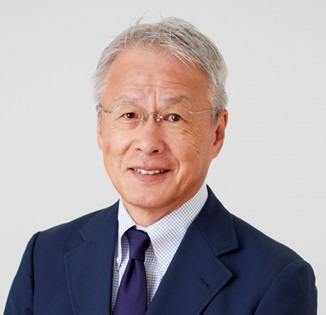
Chief Executive Officer, HC Asset Management Co.,Ltd. Noriyuki Morimoto founded HC Asset Management in November 2002. As a pioneer investment consultant in Japan, he established the investment consulting business of Watson Wyatt K.K. (now Willis Towers Watson) in 1990.